Least corrupt region and got investments.
Based on your input, it appears you are referring to Titoism—the political ideology and regime associated with Josip Broz Tito and the Socialist Federal Republic of Yugoslavia.
The premise in your prompt ("Least corrupt region and got investments") refers to a specific historical phenomenon: compared to other Eastern Bloc communist countries during the Cold War, Yugoslavia was indeed perceived as having somewhat less systemic corruption in daily life (due to market mechanisms) and received significant foreign investments (from both the West and the East) due to its non-aligned status.
Here is a breakdown of the core concepts and structure of Titoism.
1. Core Concepts
Titoism is a variation of Marxism-Leninism. It was designed to allow Yugoslavia to pursue socialism while remaining independent of the Soviet Union (USSR).
A. "Socialist Self-Management" (Samoupravljanje) This is the defining economic feature of Titoism. Unlike the Soviet model where the state owns and controls all industry, Titoism advocated for workers to control their enterprises.
- The Concept: Workers councils were formed in factories to make decisions on production, prices, and profits.
- Relation to your prompt: This decentralized the economy. Because factories had to compete and be profitable (unlike in the USSR), managers were held more accountable, which helped reduce the "soft corruption" and laziness often found in strict command economies.
B. The "Third Way" (Non-Alignment) Tito broke with Stalin in 1948. To survive being surrounded by hostile powers (NATO and the Warsaw Pact), he co-founded the Non-Aligned Movement.
- The Concept: Yugoslavia refused to join either military bloc, instead trading and accepting aid from both the United States and the Soviet Union.
- Relation to your prompt: This is why they got investments. The West poured money into Yugoslavia to prove that communism didn't require total allegiance to Moscow. It also allowed Yugoslavs to travel and work abroad, bringing hard currency back home.
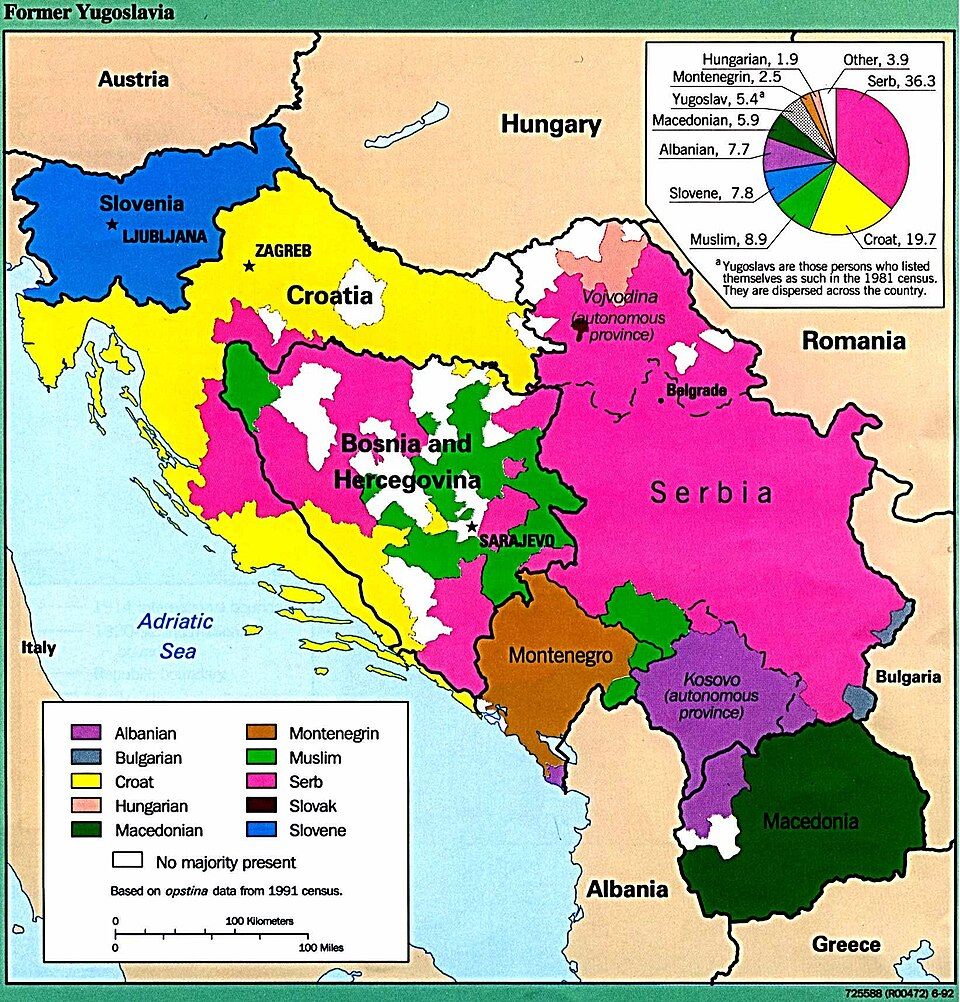
C. Brotherhood and Unity (Bratstvo i Jedinstvo) Yugoslavia was a mix of Serbs, Croats, Bosniaks, Slovenes, Macedonians, and Montenegrins.
- The Concept: A strict policy to suppress nationalism. The motto was that a "Yugoslav" identity was more important than ethnic identity.
- The Mechanism: Nationalism was treated as a counter-revolutionary crime. While this kept the country together, it required a strong secret police (UDBA) to suppress dissent.
D. Independent Communism Titoism rejected the idea that a socialist country must follow the dictates of Moscow (the "Center"). It asserted that every nation has the right to its own path to socialism based on its specific conditions.
2. Structure
The structure of Titoism was a unique hybrid of a one-party authoritarian state and a decentralized federation.
A. The Political Structure
- The League of Communists of Yugoslavia (SKJ): This was the only ruling party. However, unlike in the USSR where power was centralized in Moscow, power was distributed among the republican branches (e.g., the League of Communists of Croatia, Serbia, etc.).
- The Rotating Presidency: In later years (especially after Tito’s death), the presidency rotated among the leaders of the six republics and two autonomous provinces. This was a structural attempt to ensure absolute equality and prevent any one republic from dominating.
- The Role of Tito: Tito himself was the "Supreme Commander" and the glue holding the system together. His personal charisma (cult of personality) was the structural guarantee that the army and the diverse people would remain loyal.
B. The Economic Structure
- Market Socialism: While the state owned the "social means of production," the economy functioned on market principles. Companies set their own prices and competed.
- Decentralization (1965 Constitution): Over time, economic power was shifted from the federal government to the individual republics.
- The flaw (Structural): Wealthier republics (Slovenia, Croatia) resented having to fund the development of poorer republics (Kosovo, Macedonia). This created structural tensions that would eventually tear the country apart in the 1990s.
C. The Federal Structure
- Yugoslavia was structured not as a unitary state (like France or the UK) but as a Federation of six Socialist Republics and two Autonomous Provinces.
- Each republic had its own parliament, government, and constitution, subordinate only to the Federal Constitution.
Summary Analysis: The "Least Corrupt / High Investment" Paradox
To address your specific point directly within this framework:
-
Why "Least Corrupt" (Relatively): In the Soviet Bloc, corruption was usually systemic and necessary to survive because shortages were everywhere (you had to bribe to get bread or an apartment). In Yugoslavia, because of Self-Management and a Market Economy, goods were available. You didn't need to bribe a shopkeeper; you just bought what you wanted. While high-level political corruption existed (nepotism in the party), the daily corruption was lower than in neighboring communist states.
-
Why "Got Investments": Structurally, Yugoslavia acted as a Gateway. The West (US/UK) viewed a stable, independent Yugoslavia as a thorn in the side of the Soviet Union. Therefore, they provided billions in loans and allowed Western companies (like auto manufacturers) to build factories there. This open-border policy was a structural impossibility for countries inside the "Iron Curtain."